 Borgmann Aquaponics Hydroponics


Structured Decision Making (SDM)
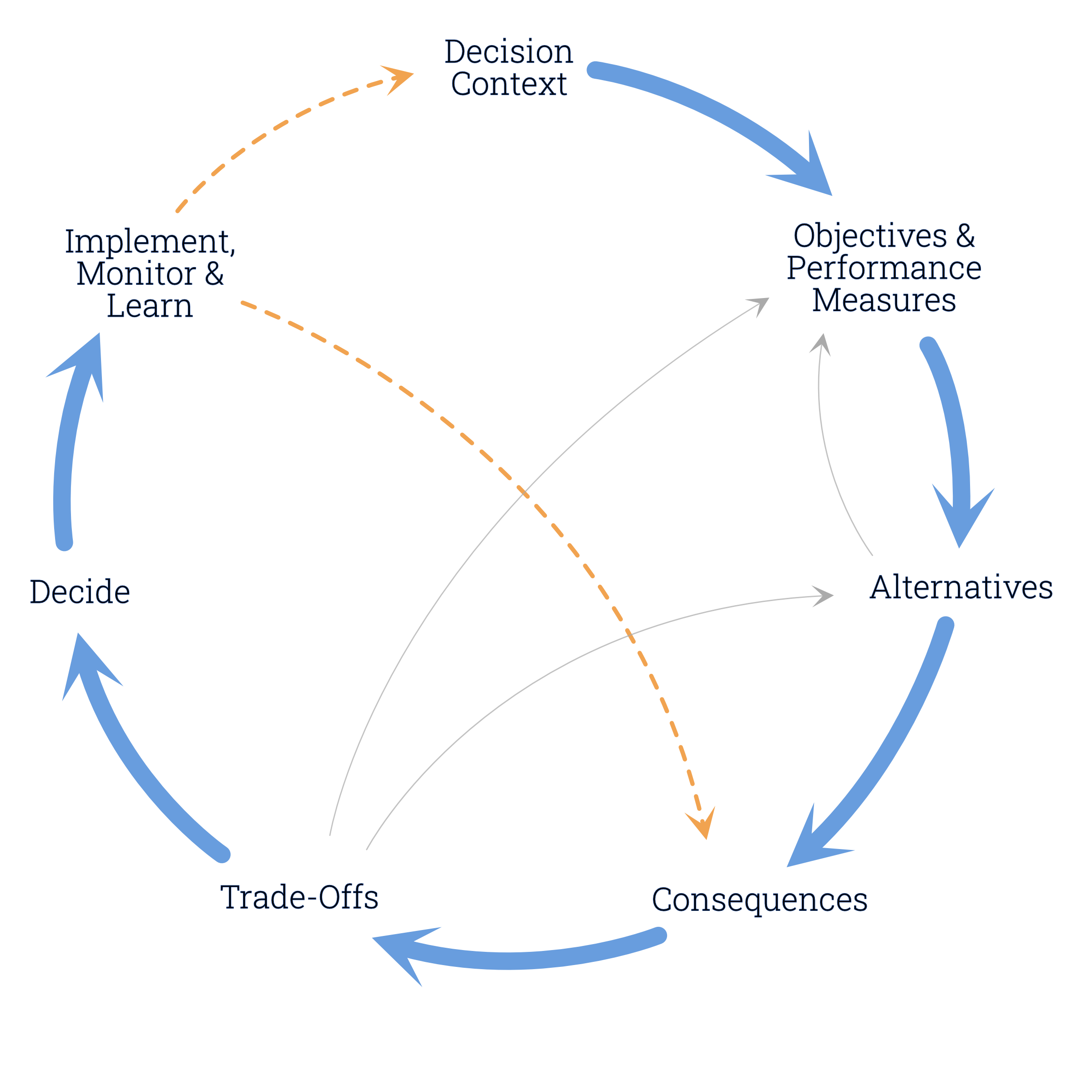
Structured Decision Making (SDM) is a systematic approach for complex decisions that ensures transparency, traceability, and consistency.
What is Structured Decision Making?
SDM is a process-oriented framework that guides decision-makers through a series of logical steps. Unlike intuitive decisions, SDM is based on explicit criteria, clear objectives, and systematic analysis.
The 6 Core Steps in Detail
1. Define the Decision Context
Goal: Clearly define the problem and establish framework conditions
- Precisely describe and scope the problem
- Identify stakeholders
- Clarify resources and timeframe
- Establish decision boundaries
Example: "We need to modernize our IT infrastructure, with a budget of €500,000 and 12 months timeframe."
2. Establish Objectives and Success Criteria
Goal: Develop measurable criteria for decision-making
- Define primary and secondary objectives
- Establish quantitative and qualitative metrics
- Weight the criteria
- Identify conflicting objectives
Example: Cost (40%), Scalability (30%), User-Friendliness (20%), Implementation Time (10%)
3. Develop Alternatives
Goal: Generate a complete set of realistic options
- Brainstorm without evaluation
- Conduct inventory analysis
- Benchmark with other organizations
- Promote creative solution approaches
Example: Cloud solution, On-Premise upgrade, Hybrid model, Outsourcing
4. Analyze Consequences
Goal: Evaluate the predictable impacts of each alternative
- Conduct cost-benefit analysis
- Perform risk assessment
- Analyze stakeholder impacts
- Consider long-term consequences
Example: Cloud solution has lower initial costs but higher long-term dependency
5. Evaluate Trade-Offs and Decide
Goal: Select the best option based on the analysis
- Summarize analysis results
- Resolve conflicting objectives
- Apply decision matrix
- Justify the recommendation
Example: Hybrid model offers the best balance of cost control and flexibility
6. Implementation and Monitoring
Goal: Implement the decision and measure success
- Create an action plan
- Assign responsibilities
- Define milestones and KPIs
- Establish feedback loops
Example: Quarterly reviews, monthly status reports, adjustments for deviations
Practical Implementation: How to Get Started with SDM
✅ Simple Start
- Start small: Choose a less critical decision for your first attempt
- Involve team: At least 2-3 people for different perspectives
- Use template: Simple table with alternatives and criteria
- Budget time: Plan 2-3 hours for the complete process
- Document: Record decision matrix and justification
?️ Tools and Templates
- Decision matrix: Excel spreadsheet with weighted criteria
- Pro-con list: Extended version with weightings
- SWOT analysis: For each alternative separately
- Cost-benefit analysis: Quantitative and qualitative factors
- Stakeholder map: Impacts on different groups
When is SDM Worthwhile?
✅ Ideal for
- Strategic decisions
- High investments
- Complex problems
- Multiple stakeholders
- Long-term impacts
⚠️ Use with Caution
- Urgent decisions
- Simple problems
- Limited resources
- Clear preferences
❌ Not Suitable
- Emergency situations
- Routine decisions
- Purely emotional topics
- Very small budgets
? First Steps for Your Next Decision
Start with this simple template: Take a piece of paper and note down (1) The exact problem, (2) 3-5 main objectives, (3) At least 3 alternatives. Even this simple structure significantly improves your decision quality.
Structured Decision Making transforms complex decisions from an overwhelming challenge into a manageable process. The effort is particularly worthwhile for important decisions with long-term consequences.
Images by pch.vector on Freepik
More at: https://www.structureddecisionmaking.org/