
Fish stocking density is subject to legal requirements and biological limits. This article explains the legal framework and practical recommendations for species-appropriate keeping. However: As of January 26, 2026, there are no uniform, EU-wide binding stocking density regulations for aquaponics systems. Regulation is multi-layered and based on several areas of law. The permissible density results from the interaction of national animal welfare law, fertilizer law, and the practical limits of your specific aquaponics system design. Consultation with the relevant veterinary and environmental authorities before planning is essential. Don't forget to bring your lawyer along!
Legal Basis: REGULATION (EC) No. 710/2009 & (EU) 2018/848
The European Union regulates organic aquaculture in Regulation (EC) No. 710/2009. These requirements are binding for all operations that wish to market their products as organic.
Your legal status in transition:
Regulation 710/2009 is an implementing regulation for the old Organic Basic Regulation (EC) 834/2007. With the introduction of the new EU Organic Basic Regulation (EU) 2018/848 (fully applicable since January 1, 2022), Regulation 710/2009 was formally repealed.
BUT: A transitional arrangement applies.
According to Article 58(3) of Regulation (EU) 2018/848, the old implementing provisions (such as 710/2009) continue to apply until they are replaced by new, specific legal acts. This means: For organic aquaculture, Regulation 710/2009 remains de facto valid law for the time being.
The EU Commission is working on new, specific legal acts for organic aquaculture under the new Basic Regulation. However, this process has not yet been completed (as of 2026).
Note on Application
The specified stocking densities represent maximum values. In practice, lower densities should be aimed for to ensure the stability of the ecoponic system and the well-being of the fish.
Stocking Densities according to EU Organic Regulation
The maximum permitted stocking densities for different fish species in closed recirculation systems:
Overview of Maximum Stocking Densities
| Fish Species | Scientific Name | Max. Stocking Density | Special Characteristics |
|---|---|---|---|
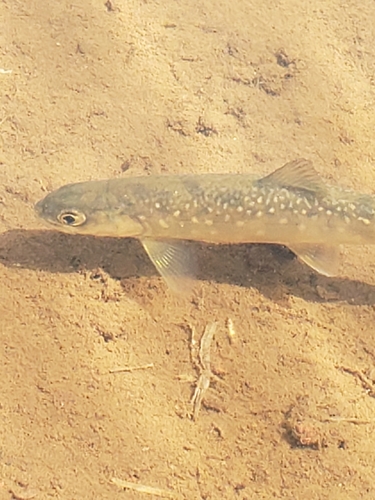
| Brook Trout | Salvelinus fontinalis | 15 kg/m³ | Requires cool, oxygen-rich water |
| Whitefish (Coregonus) | Coregonus spp. | 15 kg/m³ | Demanding regarding water quality |
| Trout (general) | Oncorhynchus, Trutta | 15 kg/m³ | Well-suited for cooler systems |
| Arctic Char | Salvelinus alpinus | 20 kg/m³ | More robust than brook trout, tolerates slightly higher densities |
| Brown and Rainbow Trout | Salmo trutta fario, Oncorhynchus mykiss | 25 kg/m³ | Most commonly used species in aquaponics systems |
| Salmon (various) | Salmo trutta (various subspecies) | 20 kg/m³ | For larger systems with stable conditions |
| Milkfish | Chanos chanos | 10 kg/m³ | For warmer systems, brackish water possible |
| Tilapia | Oreochromis spp. | 10 kg/m³ | Popular species for warm systems, robust |
| Mekong Catfish | Pangasius spp. | 10 kg/m³ | Fast-growing, for warmer systems |
Practical Implementation of Stocking Densities
The legal requirements are maximum values. In practice, various factors should be considered:
Recommended Practical Values
For stable ecoponic systems, the following stocking densities are recommended:
- Initial stocking: 30-50% of the permitted maximum density
- Established system: 60-80% of the permitted maximum density
- Optimal performance: 5-10 kg/m³ for most species
Lower densities increase system stability and reduce the risk of disease.
Risks of Excessive Stocking Densities
- Increased oxygen demand
- Faster accumulation of metabolites
- Higher stress levels for fish
- Lower resistance to diseases
- More unstable nutrient ratios for plants
Calculating Stocking Density
Stocking density is calculated based on the total volume of the system:
Calculation Formula
Stocking density (kg/m³) = Total fish weight (kg) / System water volume (m³)
Example calculation:
- System water volume: 2 m³ (2000 liters)
- Target stocking density: 10 kg/m³
- Maximum fish weight: 20 kg
Practical Tip
Consider the expected final weight of the fish in the calculation, not the stocking weight.
Adjustment Factors for Practice
Optimal stocking densities can vary depending on system characteristics:
Factors for Higher Densities
- Highly efficient oxygen input systems
- Excellent filtration performance
- Minor temperature fluctuations
- Experience in system management
- Redundant system components
Factors for Lower Densities
- Limited oxygen supply
- Limited filtration capacity
- High temperature fluctuations
- Little experience with the system
- Sensitive fish species
Monitoring at Different Stocking Densities
Monitoring should be adapted to the stocking density:
Monitoring Parameters
| Parameter | Low Density (<10 kg/m³) | Medium Density (10-20 kg/m³) | High Density (>20 kg/m³) |
|---|---|---|---|
| Oxygen content | Daily check | Several times daily | Continuous monitoring |
| Ammonium/Nitrite | 2x per week | 3x per week | Daily |
| pH value | Daily | Daily | Several times daily |
| Fish behavior | Daily observation | Several times daily | Several times daily |
Important Note
The values given here are based on REGULATION (EC) No. 710/2009. Please note that national regulations may impose additional restrictions. Always inform yourself about local legal provisions before setting up an ecoponic system.
Add Comment