© Borgmann Aquaponik & Hydroponik
Alle Rechte Vorbehalten
https://borgmann-aquaponik-hydroponik.ch

Viel Erfolg wünschen wir Ihnen!

 Alaska Pollock (Gadus chalcogrammus)

Gadus chalcogrammus

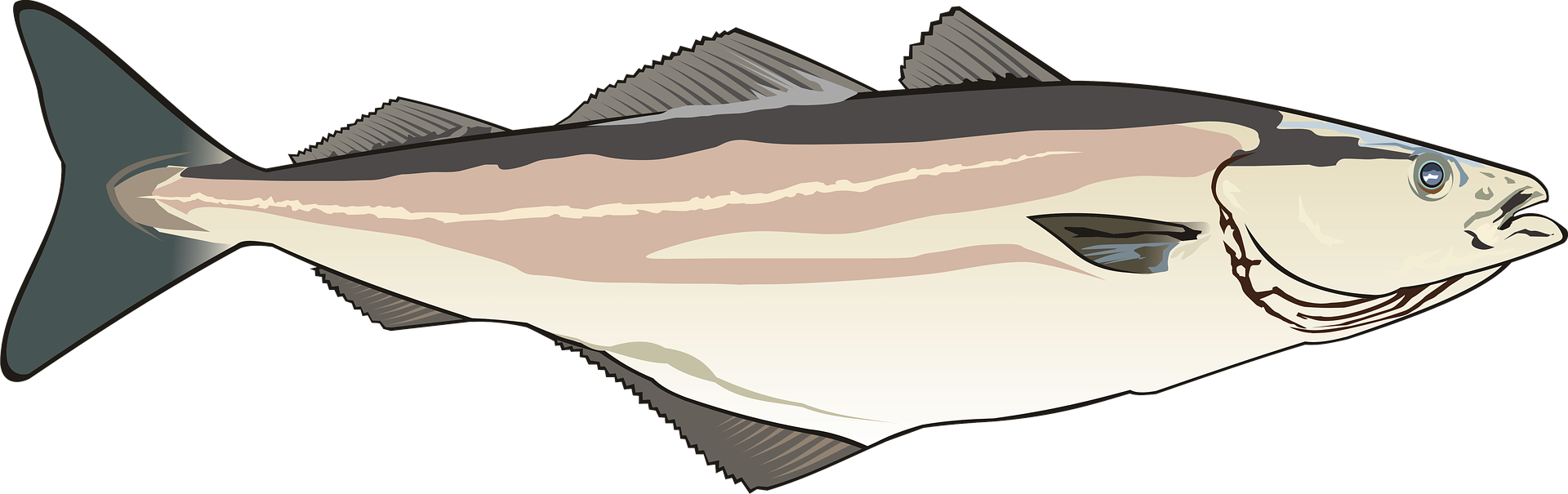
Alaska pollock is the second most popular food fish in the world and is sometimes called "Alaska cod." The name can be misleading, as it is part of the cod family and has no connection whatsoever to salmon. It has a fine, flavorful meat that contains a high proportion of omega-3 fatty acids at 0.3 g per 100 g. It is native to the coasts of the North Pacific and lives there in so-called schools. Despite warnings about overfishing from WWF and Greenpeace, Alaska pollock is the most caught fish worldwide. In Germany, it is most commonly sold in frozen ready meals such as fish sticks or gourmet fillets. Since pollock is mainly wild-caught and rarely used in aquaculture, there is still little information regarding the husbandry practices for this fish. However, due to its high popularity, pollock cannot be overlooked.

Fact Sheet
 Alaska Pollock
 
Latin name Gadus chalcogrammus
Order, Family Gadiformes, Gadidae
Occurrence North Pacific
Habitat Open sea and shallow coasts
Size / Weight 100 cm / 6 kg
Life expectancy 28 years
Stocking density 10 kg/m3 (1 (bd
Temperatures 80 Celsius 
pH range 7.7 - 7.7 (show suitable plants)
Oxygen min. 6 mg/l
Water hardness 6° dGH (dGH
NO2 (Nitrite) min. 0.06 mg/l and max. 0.5 mg/l
NO3 (Nitrate) max. 90 mg/l
Growth 55 - 65 cm after 6 years at 2.5 - 3 kg
FCR 2.0
Harvesting 800 g
Food type Omnivore
Prefers Krill, mollusks, herring, small fish
Certification depends on country
ASC / Organic seal not available, as aquaculture is rare
ASC requirements not available, as aquaculture is rare
Feed Pelleted feed, specially produced for salmon and trout, is available, for example, from the Lopeto online shop. It contains 43% protein, 23% crude fat, 21% carbohydrates, 4.2% crude fiber, 6% crude ash, and 0.8% phosphorus.
Recommendation  


Sources:
https://www.msc.org/en-us/home/meet-the-wild-ones/alaska-pollock
https://www.fischlexikon.eu/fischlexikon/fische-suchen.php?fisch_id=0000000293
https://rfmcertification.org/certified-fishery-species/alaska-pollock/
Image: https://pixabay.com/illustrations/fish-coalfish-fishing-seabed-3322228/

bd) Stocking densities according to EU regulations for organic aquaculture:

15 kg/m³ Brook trout (Salvelinus fontinalis)
15 kg/m³ Whitefish (Coregonus)
15 kg/m³ Trout (Oncorhynchus, Trutta)
20 kg/m³ Arctic char (Salvelinus alpinus)
25 kg/m³ Brook and rainbow trout
20 kg/m³ Salmon: Brown trout (Salmo trutta fario), Lake trout (Salmo trutta lacustris), Sea trout (Salmo trutta trutta), Rainbow trout (Oncorhynchus mykiss)
10 kg/m³ Milkfish (Chanos chanos)
10 kg/m³ Tilapia (Oreochromis sp.)
10 kg/m³ Mekong catfish (Pangasius sp.)
Quote: Requirements include compliance with the prohibition of water quality deterioration (2) (in accordance with Directive 2000/60/EC European Water Framework Directives), as well as an oxygen saturation of at least 7mg/L and a minimum inflow rate of 3 liters per second per ton of fish. Under no circumstances should animals show injuries (e.g., to fins) indicating excessive stocking density. Tropical freshwater fish (e.g., Milkfish Chanos chanos, Tilapia Oreochromis sp., Mekong catfish Pangasius sp.): the stocking density must not exceed 10 kg/m3 as an upper limit in ponds and net enclosures (pens, enclosures). 
 
Stocking density regulation EU: COMMISSION REGULATION (EC) No 710/2009 of 5 August 2009
 

Context:


URL

Add Comment

Please enter your name.
Maximum 1000 characters
Please enter a comment.